

SSDC
Interactive Children Exhibition: Sea Star Discovery Center
B2B/B2C
Mobile Design
UX/UI Design
Interior Design
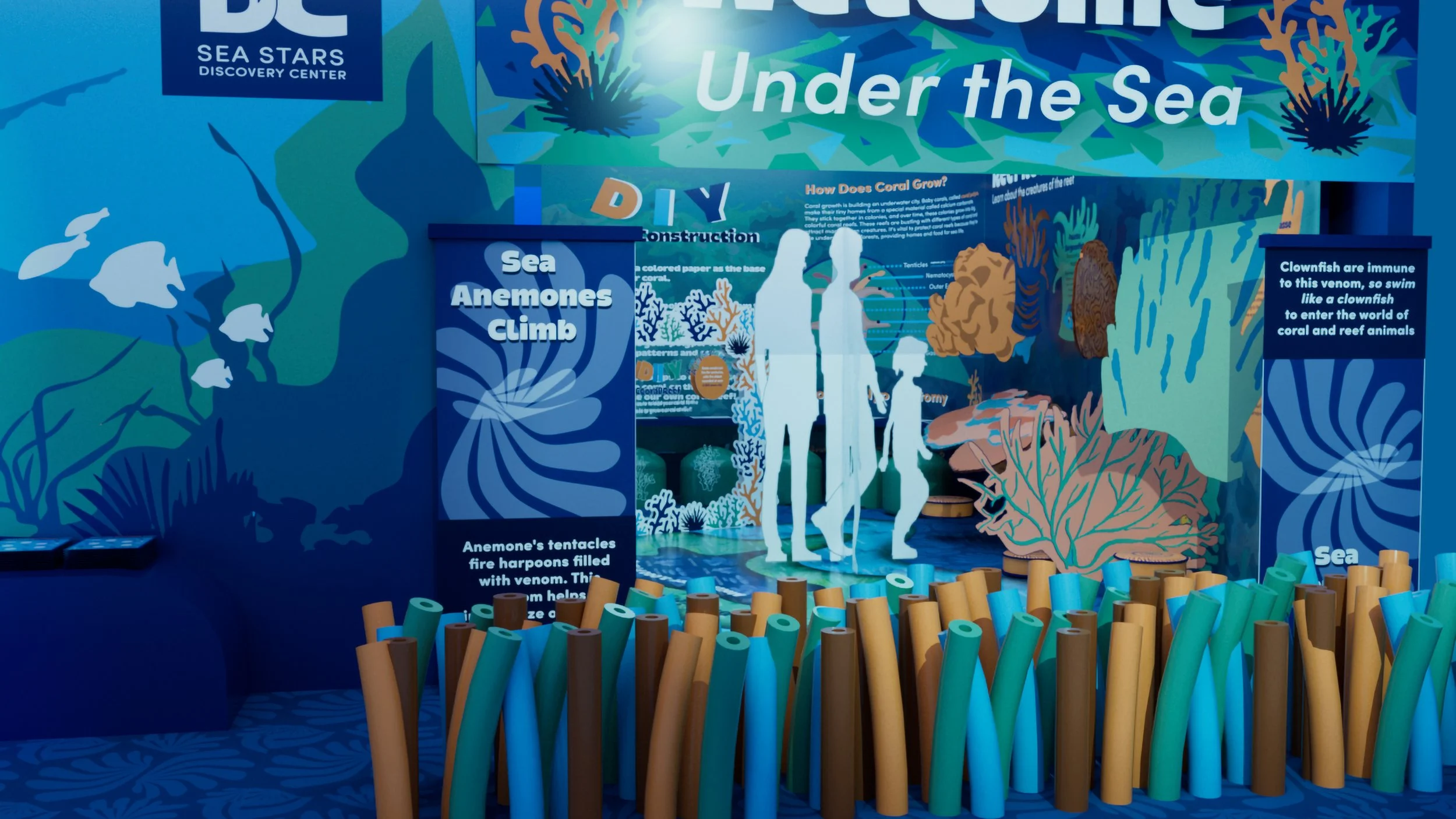
Welcome to SSDC
The team consists of five senior graphic design students. We were assigned to design an exhibition for a “Pop-Up” natural history museum for children. The target audience is children of age 13 years and younger. The exhibition includes branding guideline and individual infographic-based exhibits for elements such as Biology, Paleontology, Archaeology, and two contemporary culture exhibits.
Tools
Adobe Illustrator | InDesign | Photoshop | Cinema 4D | AdobeXD | Procreate | Box
Timeline
4 Weeks
Team Members
Emma Draube (Oceanic Usage), Madeline Shumaker (Climate Change), Megan Eddy (Paleontology), Hannah Berg (Biology), Gabriele Basa (Archaeology)
Overview


🎯 Project Goal:
Create an exhibition with an engaging and cohesive museum experience with the target audience children ages range from 13 years and younger with interactive and informational infographics.
Our logo is intended to be playful and catered towards children through the usage of a rounded, sans-serif font, Montra. We paired our logo with a thinner, less dense font, Sofia Pro.
Each team member got our own category to delft into, and I got Archaeology section which I was assigned to research in-depth about ocean ruins/discoveries. I did thorough research on ocean discoveries and how they are affected by climate, biological influences and oceanic use.
After deciding the exhibition’s name and brand guidelines, our team moved forward with section planning where we determined how our exhibition would look like starting from macro image to micro sections. Our team carefully crafted each section and how we would incorporate wall infographic with interactive and playful children activities.
Tools
Adobe Illustrator | InDesign | Photoshop
Timeline
2 Weeks
Design Process

Exhibition hall B&W layout
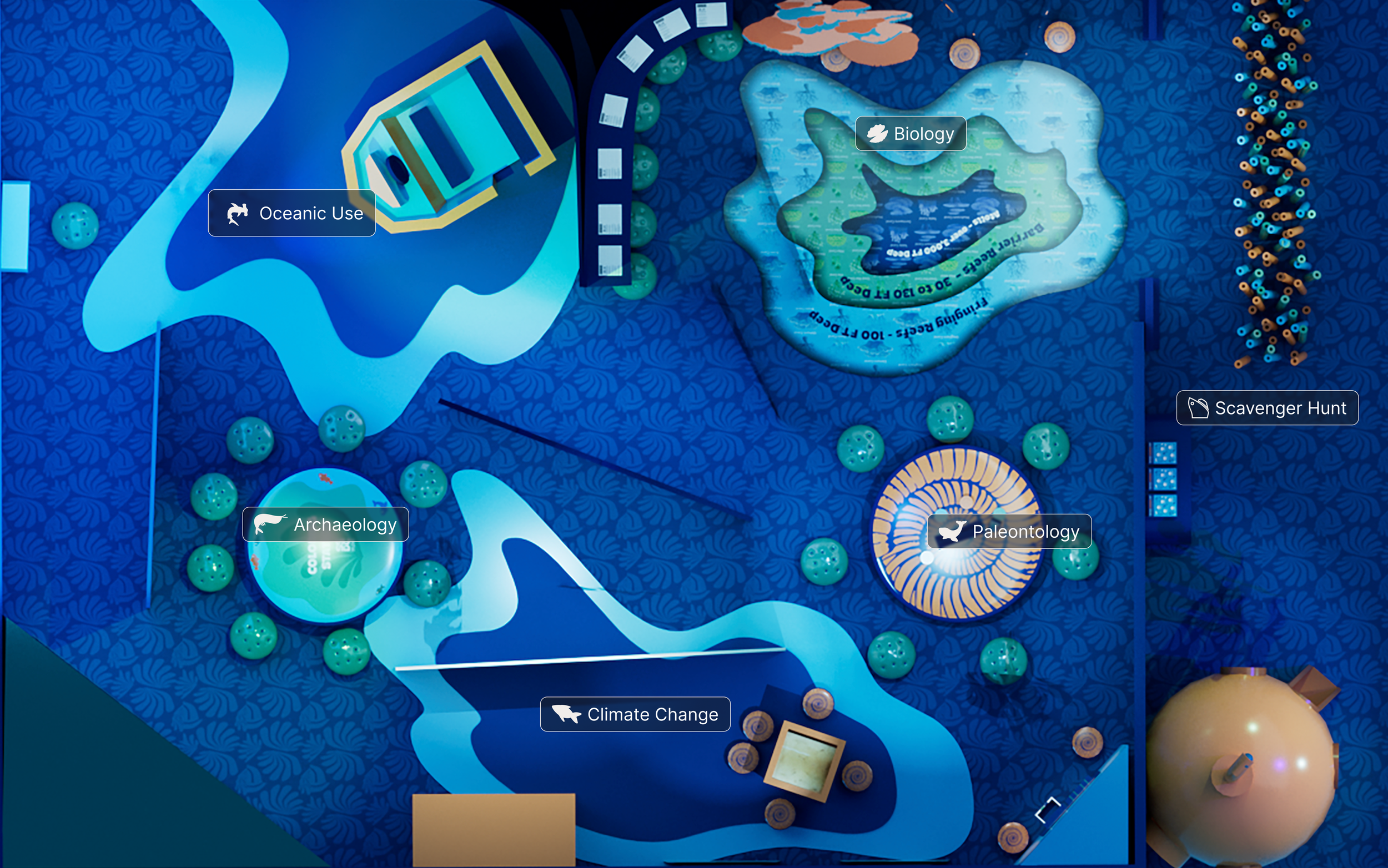
3D Render made by our team member, Hannah Berg

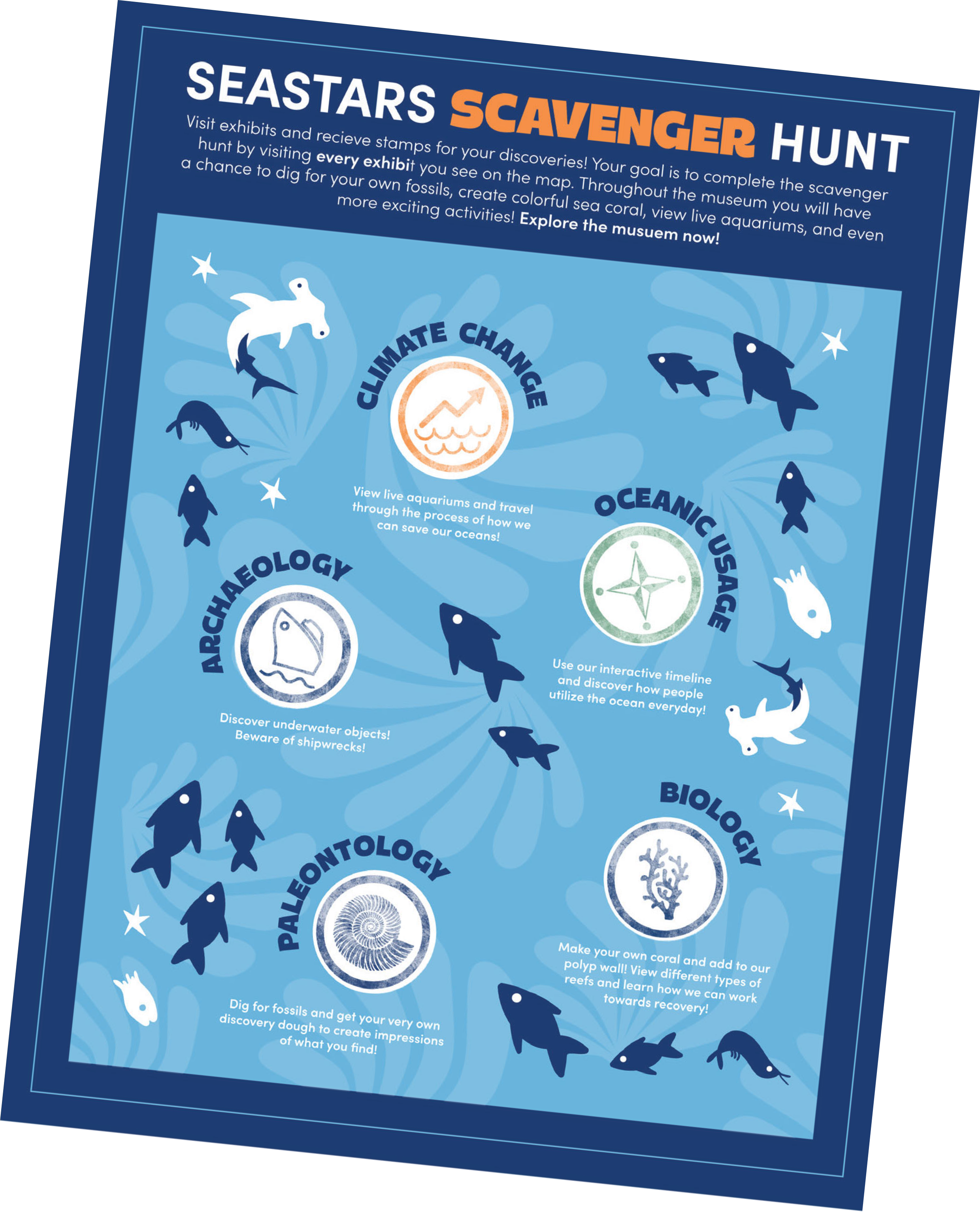
Scavenger Hunt
Scavenger Hunt is an exhibition-long activity where children are encouraged to visit all booths while collecting stamps for scavenger hunt. Full-stamped card will be awarded with prizes.
The goal of this continous activity is to boost children’s confidence and curiosity in getting to know more about ocean and its discoveries.
Individual Process (Archaeology)


Our group decided to go with graphic-style shapes as part of our brand identity to be incorporated in all of our booths. After looking at some existing museums as inpirations, we wanted to get children have both individual and social interactions while discovering our exhibiton. We have infographics wall for them to learn new information and, in my booth, a coloring station for the children to work on their creativity while have fun with the other children in the station.

My initial research focuses on my exhibition which is archaeology in general and how it works in general. As I went with my research, I got to know that there were lots of discoveries under the water, so I decided to particularize to one discovery which was the shipwrecks to incorporate the ‘small-big discoveries.’

I started my skecthes with a circular pattern for kids to have a better experience in udnerstanding archaeology starting from the definition to what can be found under the water. I also intended to have the discoveries laid out on the wall and have a ball pit for the kids for an interactive activity where they could do a treasure hunting to find shipwreck figurines.
Biology
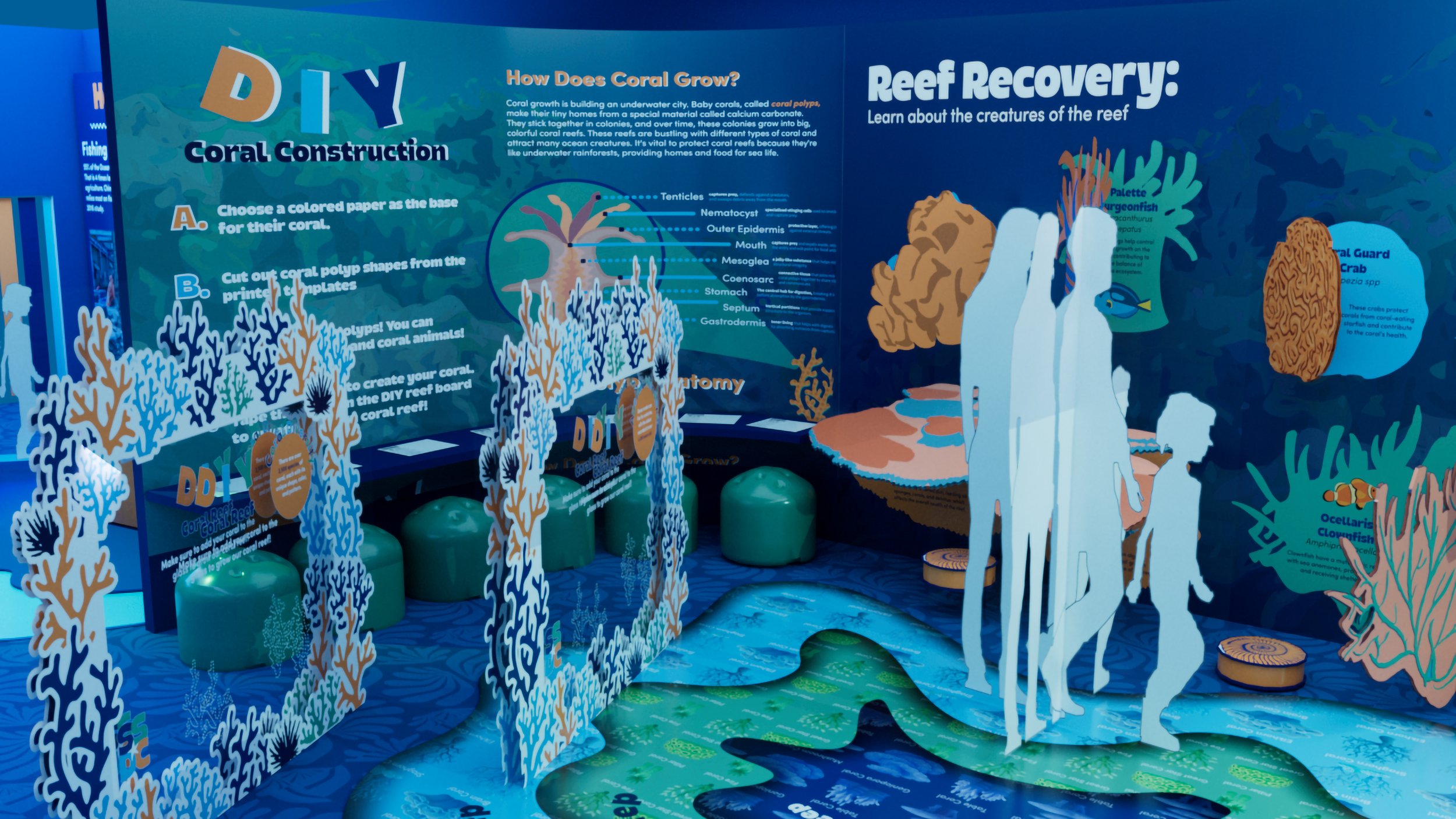
The Biology Experience Booth offers an engaging exploration of coral reefs, divided into four distinct aspects.
Paleontology
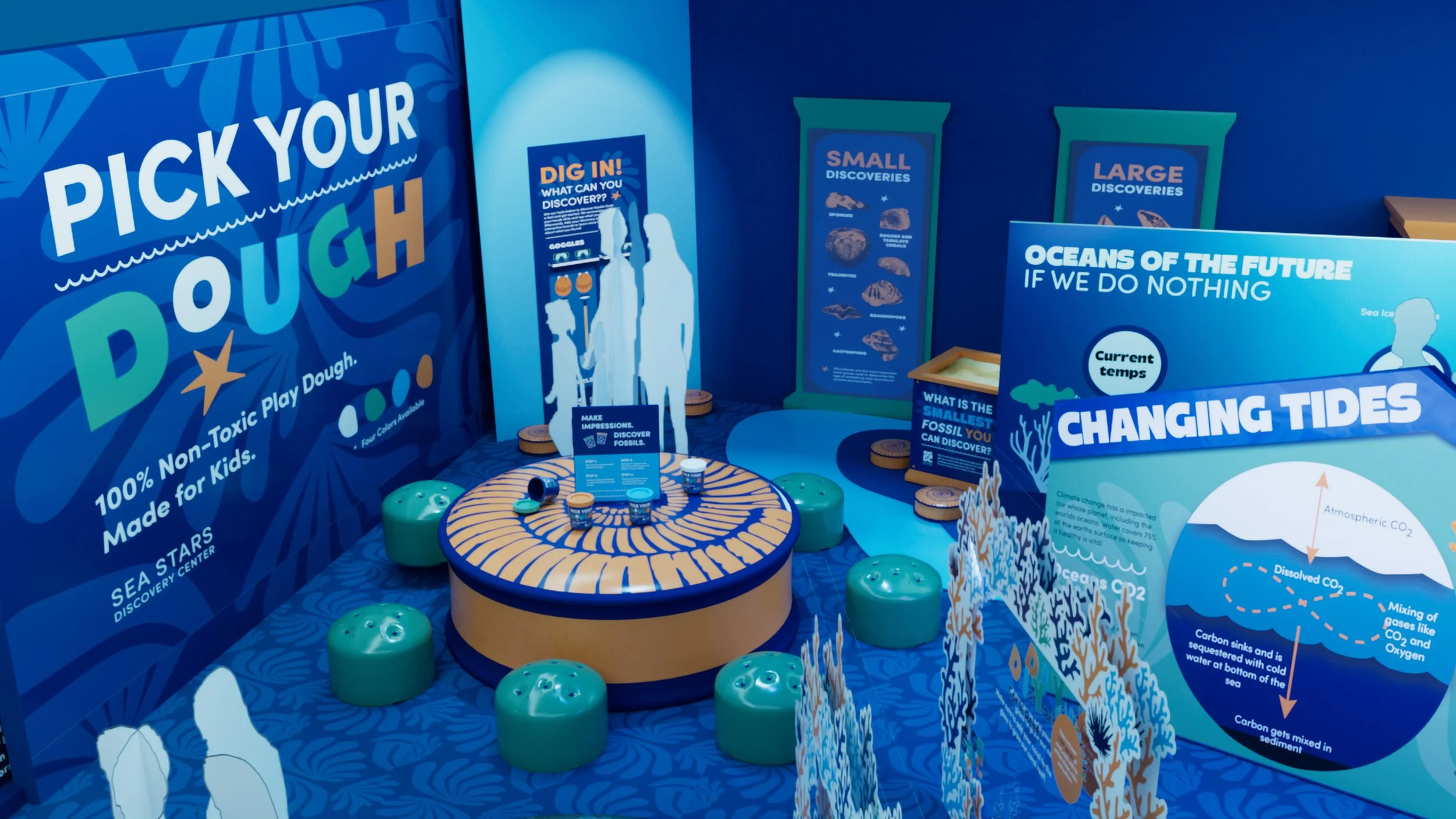
Dig in and discover ocean fossils! Use tools provided to dig in our sandbox to see what you can find! Compare what you found on our interactive screens to learn more about your discovery. Grab your very own discovery dough and make impressions of what you found!
Archaeology
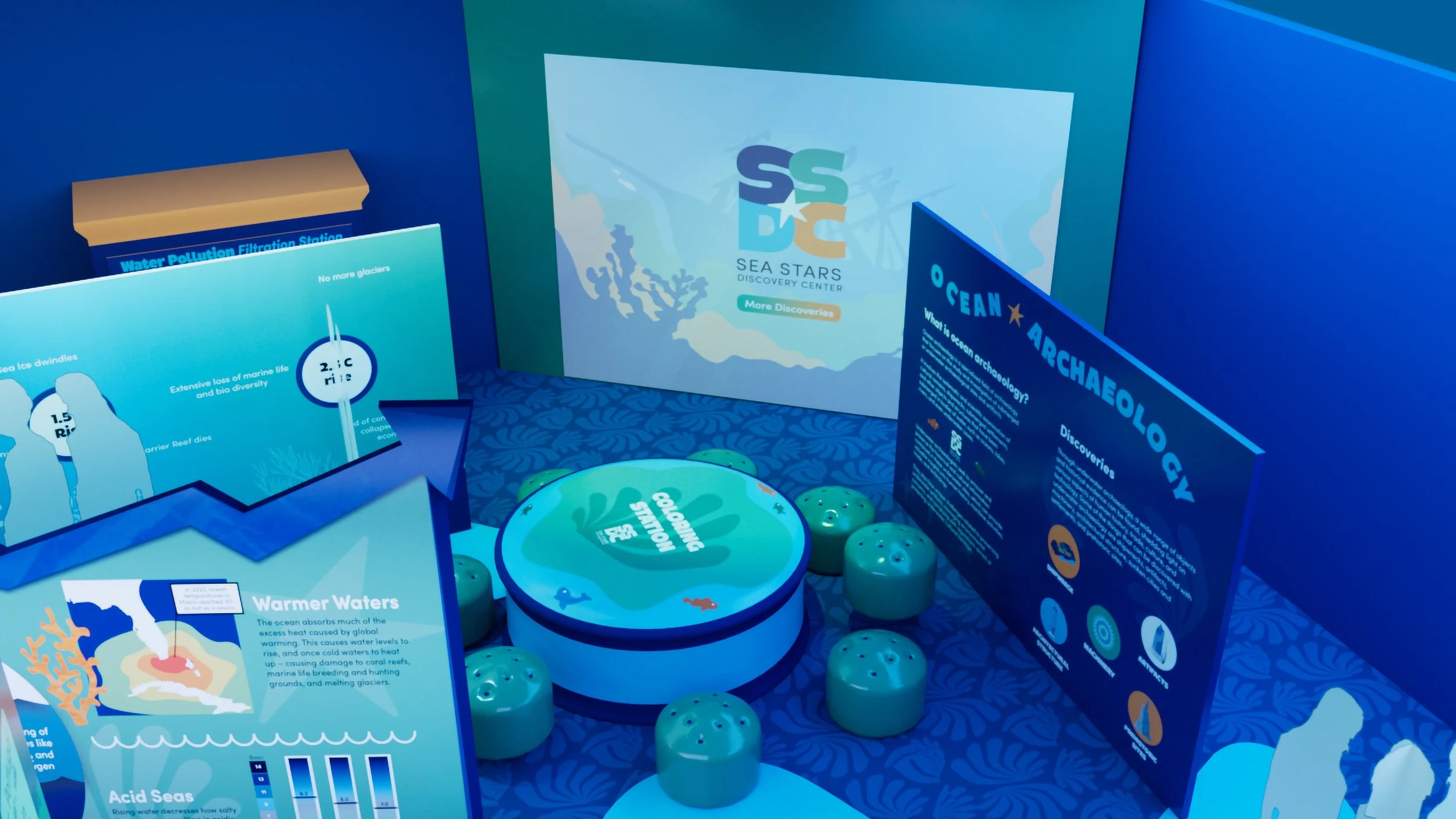
Dive deep into the fascinating world of ocean archaeology at the SeaStars Discovery Center exhibition. This showcase invites you to explore the hidden treasures of the deep, offering a window into our ocean’s past. Marvel at shipwrecks and what it is like down under the ocean, and color your own shipwreck.
Climate Change
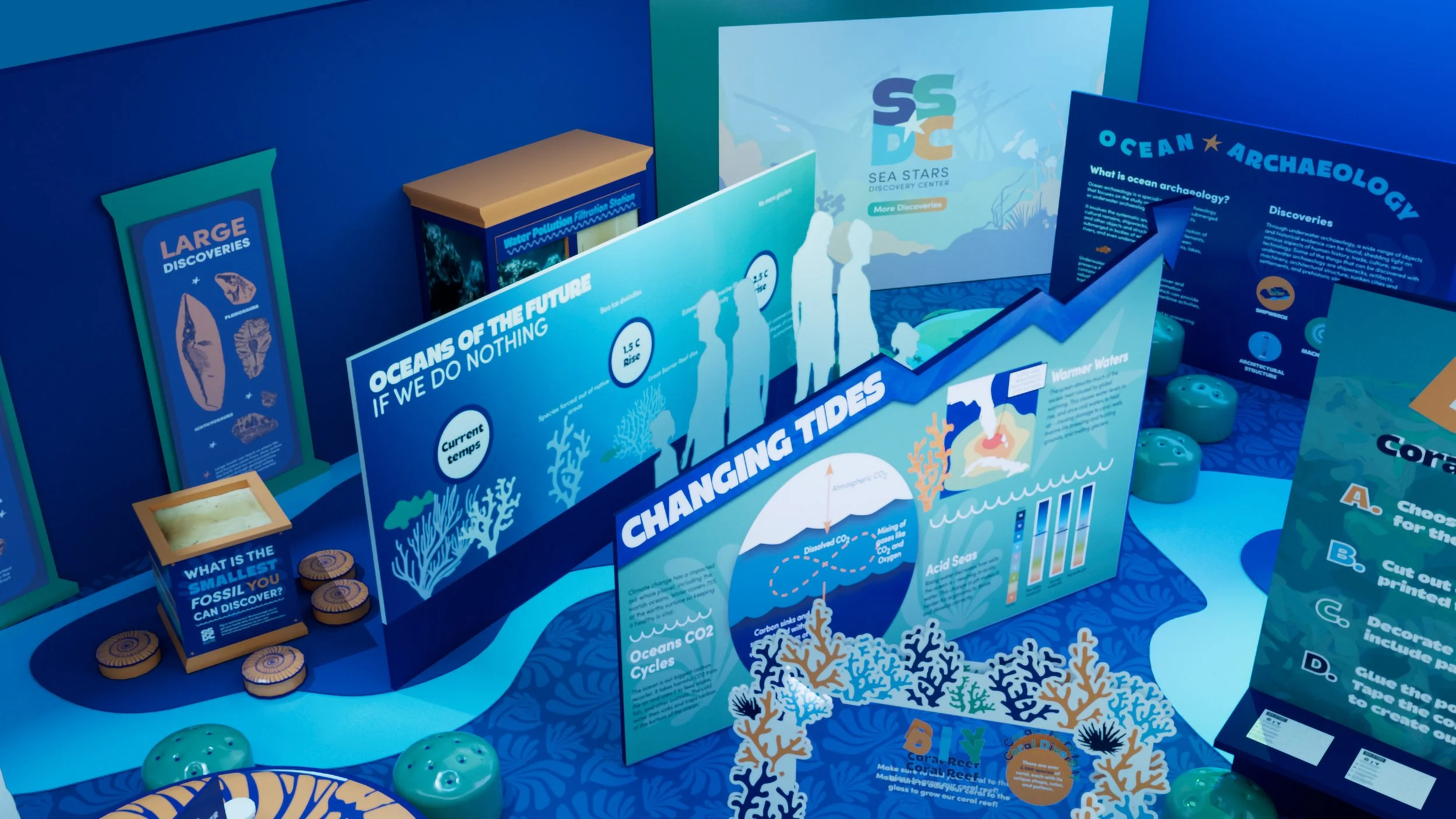
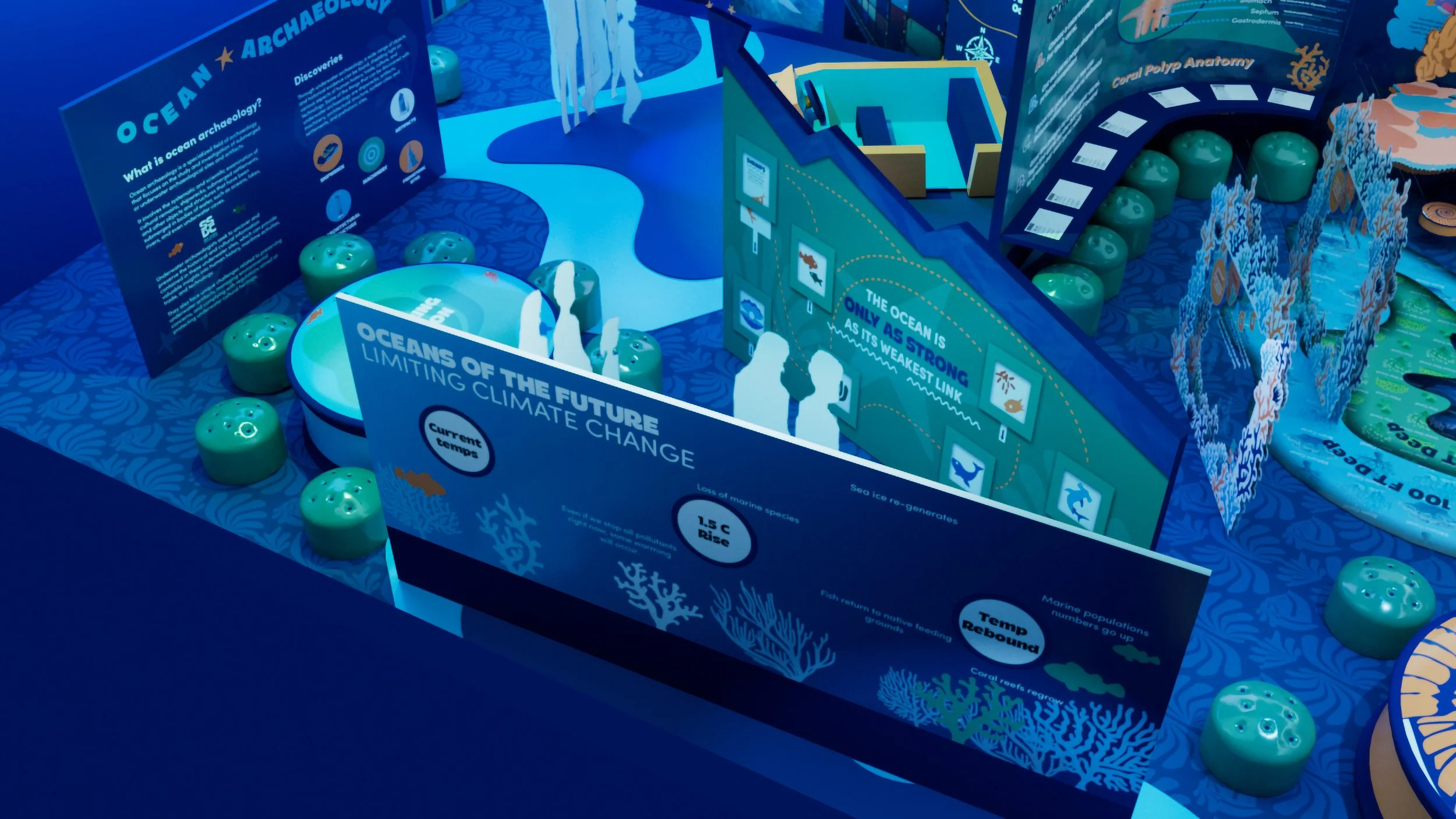
The ocean covers 71% of the earth, and as climate change shifts the whole world, oceans have bore the brunt. This amazing system supports interconnected relationships that have the potential to mitigate climate change. But if we don’t help our oceans out, the future could look very bleak.
Oceanic Usage
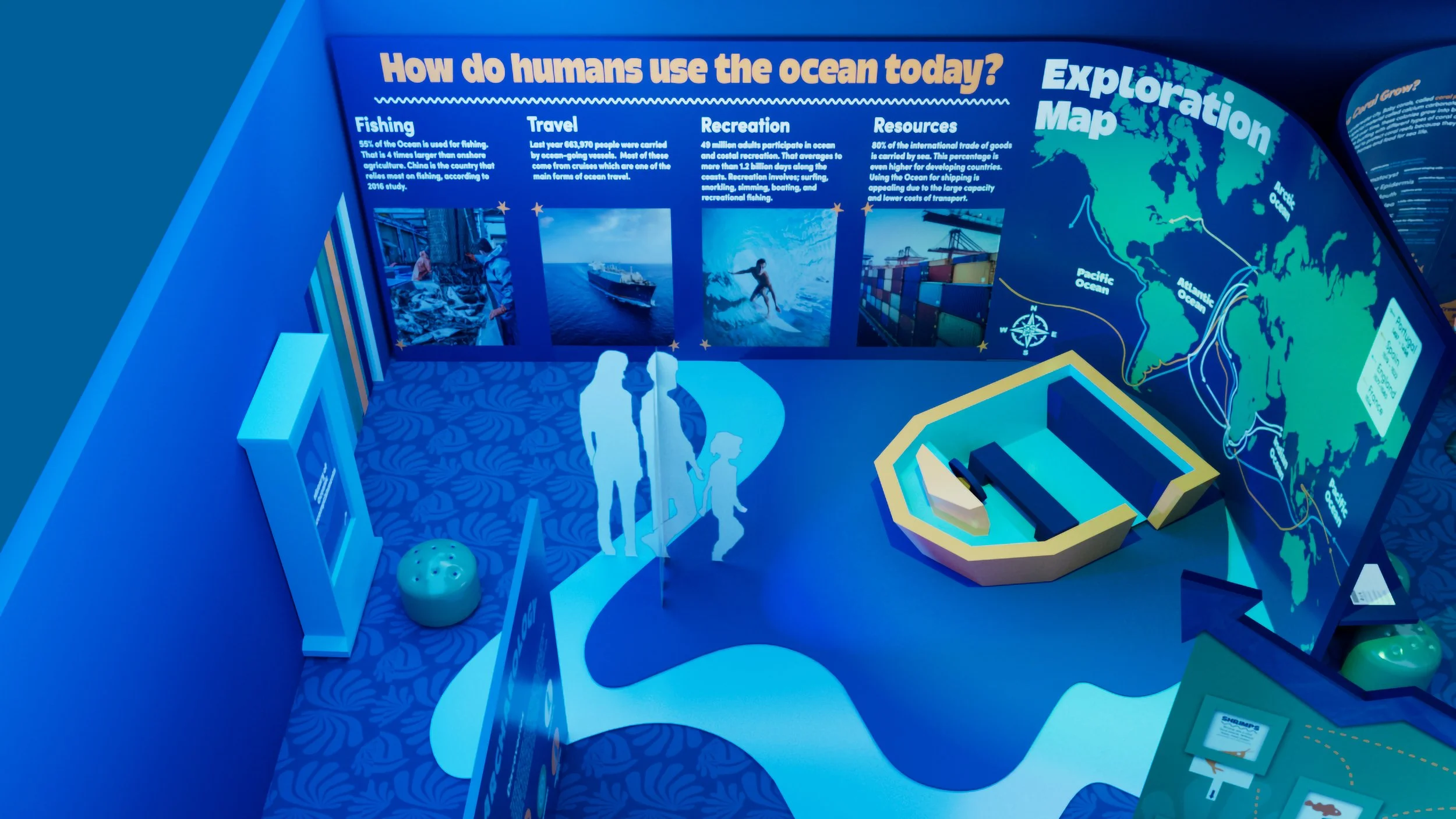
We use the ocean for so many different things. Through this exhibit, we wanted to display some of these uses and show how our use of the ocean has evolved over time. Journey through an interactive timeline and discover how people have used our ocean!
✏️ Discoveries Coloring Pieces
After gaining information from infographic, children will have the opportunity to leash out their creative spark by coloring ocean discoveries with informative ocean findings.
✏️ Interactive Touch-screen infographic
Besides wall infographic, children will also have the opportunity to interact with technology by gaining knowledge with interactive screen where they can discover more underwater discoveries.

Ready for more design?
— Select any project below